Connect With Our Team


Transparent Solar Panels: The Future of Windows & Buildings
Dec 09, 2025
3775 View
Transparent Solar Panels: The Future of Windows & Buildings
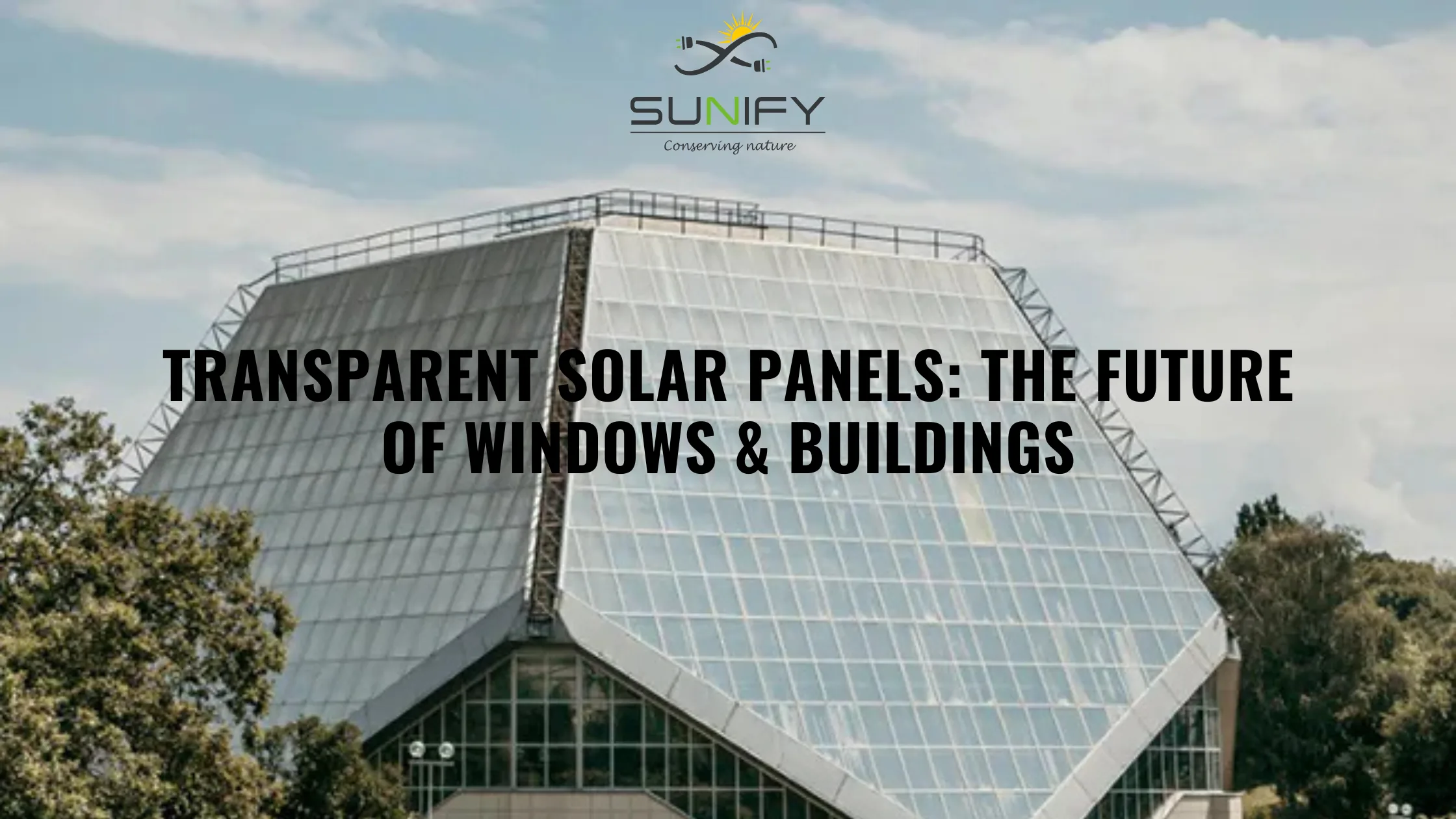
Modern architecture is evolving rapidly, and one of the most exciting advancements in the solar industry today is the rise of transparent solar panels. These innovative technologies are turning regular windows, facades, and glass structures into energy-generating surfaces. As cities move toward smarter, greener, and space-efficient buildings, transparent solar solutions are becoming a breakthrough that will transform how we generate and consume energy.
With the increasing global demand for clean power and the rising trend of glass-heavy constructions, transparent solar panels represent the perfect blend of functionality, aesthetics, and sustainability.
What Are Transparent Solar Panels?
Transparent solar panels, often called clear solar panels, invisible, or translucent PV panels, are photovoltaic modules designed to function like traditional glass while capturing solar energy. These panels allow for varying degrees of visibility ranging from fully transparent to semi-tinted or translucent while generating electricity by absorbing ultraviolet (UV) and infrared (IR) light, which are invisible to the human eye.
-
Transparent: Designed to appear like regular glass.
-
Clear: Maximum visibility, minimal visual difference from conventional solar windows.
-
Invisible: Practically indistinguishable from glass in luxury architecture.
-
Translucent: Allows some light through, often tinted or diffused.
How Do Transparent Solar Panels Work?
To truly understand the innovation behind transparent solar panels, it’s essential to look at how they are able to generate electricity while still maintaining the clarity of regular glass.
1. Selective Light Absorption
Transparent solar panels are designed to allow visible light to pass through while capturing only the ultraviolet (UV) and infrared (IR) wavelengths that the human eye cannot see. By selectively absorbing only the non-visible parts of the spectrum, the panel stays see-through while still producing energy. This unique characteristic makes them far more suitable for windows, facades, and glass-heavy buildings compared to traditional opaque solar panels.
2. Light Conversion Inside the Panel
Once the UV and IR wavelengths enter the panel, they are redirected across the glass surface using special luminescent materials. The light travels toward the edges of the panel, where narrow solar cells are positioned within the frame. These hidden solar cells convert the captured light into electricity, which then flows into the building’s solar PV system like any other photovoltaic setup. This method is called Transparent Luminescent Solar Concentrator (TLSC) technology, one of the most promising breakthroughs in solar engineering.
3. Thin-Film & Organic Photovoltaics (OPV)
Another approach used in transparent solar panel technology involves ultra-thin photovoltaic layers or organic photovoltaic materials. These films naturally allow visible light to pass through while absorbing the UV or IR wavelengths needed for power generation. Because the photovoltaic layer is so thin, it remains almost invisible to the human eye, offering designers greater flexibility in terms of visibility, transparency level, and color tone of the panels.
4. Visual Appearance
Despite their advanced internal design, transparent solar panels look almost identical to regular glass. They do not contain dark silicon cells, visible wiring, or metallic grid lines features commonly seen in traditional solar setups. Instead, the surface remains clean, smooth, and clear, allowing natural sunlight to enter the building without compromising aesthetics. This ability to blend seamlessly into modern architecture is a major reason why transparent solar panels are becoming one of the most attractive solar solutions for next-generation buildings.
Types of Transparent Solar Technologies
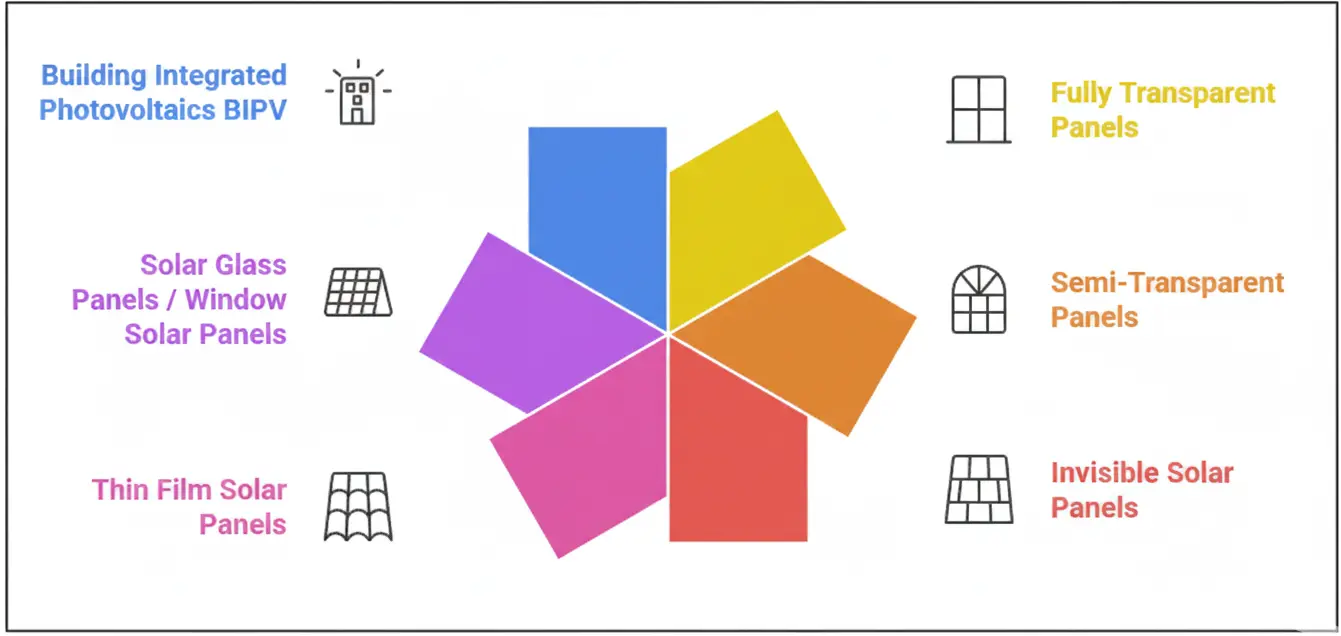
Fully Transparent Solar Panels
-
Achieve 70–90% visibility, combining glass-like transparency with solar generation.
-
Used in office building windows, entrances, and shopping malls where aesthetics are paramount.
Semi-Transparent & Translucent Solar Panels
-
Offer varying transparency ratios (e.g., 30–60% light transmittance).
-
Ideal for applications needing daylight: skylights, bus shelters, façades, and sunroofs.
Invisible Solar Panels
-
Appear nearly identical to regular glass.
-
Suited for luxury architecture, boutique hotels, designer homes, and futuristic offices.
Thin film solar panels
-
Lightweight and flexible.
-
Lower in manufacturing cost, suitable for large glass surfaces and creative designs.
Solar Glass Panels / Window Solar Panels
-
Double-glazed for thermal and acoustic benefits.
-
Integrated frames allow use as solar panel windows or structural elements.
Building Integrated Photovoltaics (BIPV)
-
Architectural integration panels serve as structural, aesthetic, and energy systems.
-
Widely used for replacing roof tiles, glass façades, and skylights in innovative buildings.
Transparent vs. Traditional Solar Panels
|
Feature |
Transparent Panels |
Traditional Panels |
|
Efficiency |
5–10% |
15–22% |
|
Design/Aesthetic |
Nearly invisible, glass-like |
Roof-mounted, clearly visible |
|
Installation |
Replace glass in buildings |
Requires extra mounting, roof/land |
|
Use Cases |
Windows, façades, skylights |
Rooftops, ground installations |
|
Cost |
Higher upfront, emerging |
Lower, mature tech |
-
Efficiency: Transparent solar panels are less efficient due to allowing visible light through.
-
Design: Seamlessly integrate into modern glass-heavy architecture.
-
Installation: Directly replace glass surfaces, saving space.
-
Use Cases: Enable new energy generation areas, especially where roof space is scarce.
-
Cost: As an emerging technology, these panels are pricier but long-term costs are expected to drop with scale.
Benefits of Transparent Solar Panels
Transparent solar technology offers several advantages:
1. Zero Additional Space: They utilize existing surfaces windows, facades, railings making them ideal for cities with limited rooftop space.
2. Aesthetic and Modern: Transparent PV enhances building design instead of interfering with it.
3. Energy + Daylight: They allow natural light while generating electricity, reducing dependency on artificial lighting during the day.
4. Reduced Heat and Cooling Costs: Some versions act as thermal insulators, reducing indoor heat and lowering AC usage.
5. Ideal for Large Buildings: Skyscrapers and commercial complexes with large glass surfaces can generate significant power.
6. Supports Green Building Certifications: They align with IGBC, LEED, and GRIHA sustainability goals.
Why Transparent Solar Panels Are the Future of Buildings
Several global trends are pushing transparent solar panels toward mainstream adoption:
-
Rapid growth of smart cities
-
Increasing environmental regulations
-
Global research from MIT, Michigan State University, and Indian solar tech companies
-
Architectural shift toward glass-heavy buildings
-
Rising demand for distributed solar generation
Transparent solar panels will eventually become a standard component in modern infrastructure, powering commercial, residential, and urban structures.
With rising demand for distributed solar generation, transparent panels are becoming one of the most promising next gen solar panels designed to blend seamlessly into the buildings we use every day.
Applications: Where Transparent Solar Panels Can Be Installed?

The versatility of transparent solar panels creates numerous installation opportunities:
-
Corporate office towers with extensive glass facades can generate significant power while maintaining professional aesthetics
-
Residential window panels in apartments and homes contribute to household energy needs
-
Educational institutions including schools and college buildings can showcase sustainability while reducing operational costs
-
Hospitality and transportation hubs like hotels, airports, and railway stations with large glass surfaces
-
Shopping malls with expansive skylights and glass atriums can offset enormous electricity consumption
-
Greenhouses benefit from selective wavelength transmission that enhances plant growth while generating power
-
Automotive applications including car sunroofs that charge vehicle batteries
-
Public infrastructure such as bus shelters and street panels providing both shelter and power
-
Architectural elements like glass railings and balconies transforming decorative features into functional energy assets
Energy Output & Efficiency: What to Expect?
Transparent panels generate less electricity per square meter than traditional panels, but their coverage area compensates for the difference.
Factors that influence output:
-
Transparency level
-
Type of technology (TLSC, OPV, thin-film)
-
Building orientation
-
Geographical location
-
Glass surface area
Semi-transparent panels usually deliver higher output because they absorb more light.
Challenges & Limitations of Transparent Solar Panels
Despite their promise, transparent solar panels face real limitations. Lower solar conversion efficiency compared to traditional systems means larger surface areas are needed for equivalent power output. Higher manufacturing costs currently limit widespread adoption, particularly in price-sensitive markets.
The technology remains in early adoption stages, with limited manufacturer options and installation expertise. Regional availability varies significantly, with developed markets seeing faster deployment than emerging economies. Building integration requires structural suitability older buildings may need reinforcement, and not all window orientations provide optimal solar exposure.
Improve Solar Performance Today
Conclusion
Transparent solar panels are redefining what is possible in modern architecture. By turning windows and building surfaces into clean energy generators, they offer a future where every glass structure contributes to sustainability and energy independence. As the world moves toward smart, efficient, and eco-friendly buildings, transparent solar technology will play a major role in shaping urban landscapes.
At Sunify Solar, we stay committed to bringing forward-thinking, high-performance solar solutions that support the next generation of clean energy. Whether you're exploring rooftop systems, BIPV solutions, or new-age technologies like transparent solar panels, Sunify Solar is here to guide you toward a brighter, greener future.
FAQs
1. Are transparent solar panels real and available?
Yes, they are real and already being tested and installed across commercial buildings, research institutes, and modern homes.
2. Can they power an entire building?
A single window won’t power a building, but large glass areas across floors can collectively generate significant energy.
3. How durable are transparent solar panels windows?
They are built using tempered or laminated solar glass, ensuring long-term durability.
4. Are transparent solar panels worth it?
Yes especially for buildings with large glass surfaces and limited rooftop area.
5. When will transparent solar panels become mainstream?
Within the next 5–10 years as adoption increases and costs decline.
Share this post :


Whatsapp Chatx
Hi! Click one of our representatives below to chat on WhatsApp or send us email to solar@sunifysolar.in

|
************** +91 81414 55503 |
