
Connect With Our Team


The Role of Solar Panels in Future-Ready Airports
Jan 05, 2026
941 View
The Role of Solar Panels in Future-Ready Airports

The aviation industry plays a major role in global connectivity, but it also contributes significantly to carbon emissions. Airports consume enormous amounts of electricity every day for lighting, security systems, baggage handling, and terminal operations. As air traffic continues to grow, energy demand is rising faster than ever. This has made sustainability a top priority for modern airport infrastructure.
This is where solar panels are transforming the future of aviation. By adopting solar energy, airports can generate clean power on-site while reducing dependence on fossil fuels. This shift is helping develop green airports and sustainable airports worldwide. With airport solar power becoming a core strategy, the aviation sector is moving closer to a low-carbon future.
Why Airports Need Solar Power
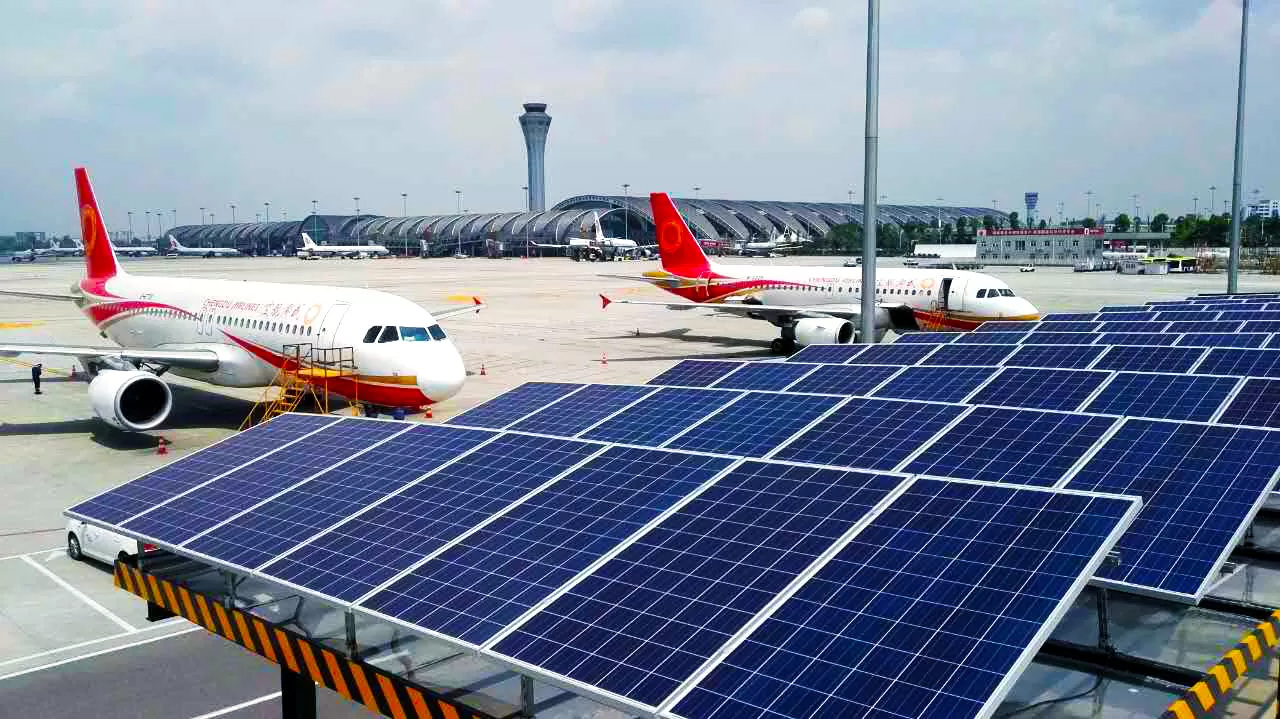
Airport solar power systems typically operate as on-grid setups, connected to the main utility grid for seamless energy flow. Solar panels capture sunlight and convert it into direct current (DC) electricity via photovoltaic cells, which an inverter then transforms into alternating current (AC) for use in airport facilities.
Off-grid systems, though less common due to airports' scale, rely on battery storage for independent operation, ideal for remote areas or backup during blackouts. Net-metering allows excess energy generated during peak sun hours to be fed back to the grid, earning credits that offset nighttime or cloudy-day consumption.
Battery storage plays a crucial role, storing surplus power for high-demand periods like evening flights or emergencies. Integration with the airport's power grid involves smart controllers that balance solar input with conventional sources, ensuring stable supply.
For peak-load management, solar systems prioritize high-energy times, such as midday operations, reducing strain on the grid and lowering costs through demand-response strategies.
How Airport Solar Power Systems Work
Airport solar power systems are designed to integrate smoothly with existing electrical infrastructure while ensuring uninterrupted energy supply. These systems operate using a mix of grid connectivity, smart inverters, and battery storage.
-
On-grid solar systems supply power directly to airport operations
-
Net-metering exports excess electricity back to the utility grid
-
Battery storage systems provide backup during outages and night hours
-
Smart inverters balance energy flow between solar, battery, and grid
-
Peak-load management reduces grid dependency during high-traffic hours
Key Benefits of Solar Panels in Airports

Environmental Benefits
Solar panels drastically reduce CO₂ emissions from airport operations and improve local air quality by replacing fossil fuel energy. This supports broader aviation industry goals of carbon-neutral growth, reducing the sector's carbon footprint sustainably.
Financial Benefits
Airports experience significant electricity bill reductions, with solar power providing long-term cost predictability. Solar installation protects airports from volatile energy prices and rising tariffs, improving budget stability.
Operational Benefits
Solar power promotes energy independence, minimizing blackout risks and strengthening airport resiliency. A reliable, decentralized energy supply helps maintain uninterrupted airport operations essential for safety and passenger convenience.
Solar Panels vs Conventional Power for Airports

Cost Comparison: Conventional grid power exposes airports to variable tariffs and carbon taxes. Solar involves high upfront investment but offers stable operating costs over decades.
Environmental Comparison: Traditional energy contributes heavily to greenhouse gases. Solar power is clean, renewable, and emission-free during operation.
Reliability Comparison: Grid power depends on infrastructure stability. Solar with batteries offers redundancy and disaster-resistant power.
Energy Scalability: Solar panel systems scale easily with airport expansion, unlike fixed grid allocations.
Cutting-Edge Solar Technologies Transforming Airports
The evolution of airport solar power is driven by revolutionary solar technologies. Bifacial solar panels, capable of capturing sunlight from both sides, improve energy output by up to 25% in open airport areas like runways and parking zones.
Next-generation perovskite tandem cells are pushing conversion efficiencies close to 30%, making them ideal for limited rooftop spaces. Anti-reflective coatings now eliminate glare risks, ensuring complete compliance with aviation safety standards.
AI-powered solar trackers dynamically adjust panel orientation for maximum sunlight capture throughout the day. Hybrid solar-battery systems now allow airports to operate on renewable power even during nighttime operations.
Looking ahead, Building-Integrated Photovoltaics (BIPV) will turn terminal glass facades into power-generating surfaces. Transparent solar windows will enable energy production without altering architectural design.
Drone-based solar farm monitoring further improves maintenance, instantly detecting faulty panels, dust accumulation, and wiring issues across massive airport solar installations.
Case Studies: Solar Success Stories
Cochin International Airport – India
Cochin Airport is globally recognized as the world first solar airport. With over 50 MW of installed solar capacity, it fully operates on renewable energy. The airport produces more electricity than it consumes annually, exporting surplus to the grid. It offsets over 300,000 metric tons of CO₂ emissions every year.
San Francisco International Airport (SFO) – USA
SFO runs a 5.2 MW rooftop solar plant that powers nearly 50% of one terminal’s energy needs. Combined with energy efficiency programs, SFO achieved major sustainability milestones without affecting operational reliability.
Dubai Al Maktoum International – UAE
Dubai plans the world’s largest 5 GW airport-integrated solar facility to serve its expanding aviation hub. The project will power terminals, airport transport systems, and ancillary logistics.
These examples prove measurable impacts in energy yield, financial payback, and environmental protection.
Challenges of Solar Panels in Airport Projects
Although solar adoption in airports is highly beneficial, several technical and operational challenges must be addressed during planning and execution.
-
High initial investment cost for large-scale solar installations
-
Strict aviation safety and glare regulations for pilot visibility
-
Maintenance challenges due to dust, pollution, and weather exposure
-
Land availability issues in metro city airports
-
Integration complexity with existing airport electrical systems
Solutions to Overcome Airport Solar Challenges
Advanced solar technologies and strong policy support have made it easier to overcome airport solar deployment barriers.
-
Use of anti-glare solar panels for aviation safety compliance
-
Installation of floating solar plants near airport water bodies
-
Adoption of third-party solar financing models and PPAs
-
Access to government solar subsidies and incentives
-
Implementation of AI-based solar O&M platforms for smart monitoring
How Will Solar Energy Shape Future-Ready Airports?
The next decade will witness complete digital integration of solar energy into airport infrastructure. Smart grids, AI-controlled energy forecasting, and hybrid renewable combinations will define airport energy systems.
Solar energy will enable airports to function as independent renewable ecosystems. Runways, cargo terminals, hangars, and parking structures will all generate power. AI-based energy systems will predict passenger traffic and dynamically allocate power.
Global aviation aims to achieve net-zero emission airports by 2050. Solar power will play the central role in meeting these goals. Airlines, airports, and governments are already investing heavily into sustainable aviation ecosystems.
Government & Global Support for Airport Solar Projects
India is rapidly expanding solar-powered airports under national renewable energy programs. Airports in Kochi, Delhi, Hyderabad, and Bangalore are leading examples.
International climate policies under the Paris Agreement encourage renewable adoption across aviation infrastructure.
Smart city mission integration further connects airport solar farms with surrounding urban renewable grids.
Why Choose Sunify Solar for Airport Solar Solutions?
Sunify Solar is a trusted expert in solar panel installation for airports, delivering efficient and sustainable solar energy systems. We provide the best solar panels that meet aviation safety standards and help airports reduce carbon emissions while cutting energy costs.
With smart, scalable solutions and dedicated support, Sunify Solar powers future-ready eco friendly airport with reliable, eco-friendly solar power aligned with global sustainability goals.
Final Conclusion: Why Solar Panels Are the Future of Airports
Solar panels are no longer optional upgrades they are essential infrastructure for modern aviation. From reducing carbon emissions and stabilizing operational costs to ensuring energy security and regulatory compliance, solar energy delivers unmatched value.
Airports that adopt solar panel installation today position themselves as leaders in sustainability, innovation, and operational resilience. The synergy between aviation and solar power is transforming how global transport infrastructure is built.
The future of aviation is no longer driven only by jets and runways it is powered by the sun. Solar panels, solar energy, and sustainable airports are now inseparable.
FAQs
1. How do solar panels benefit airports?
Solar panels reduce energy costs, lower carbon emissions, and provide a reliable, eco-friendly power source for airport operations.
2. What types of solar power systems do airports use?
Airports primarily use on-grid solar systems with net-metering and off-grid systems with battery storage for backup power.
3. Are solar panels safe near airports?
Yes, airports use anti-glare panels and conduct glare analysis to ensure solar installations do not affect pilot safety.
4. Which airport is fully solar-powered?
Cochin International Airport in India is the world’s first fully solar-powered airport, meeting 100% of its energy needs through solar.
Share this post :






Whatsapp Chatx
Hi! Click one of our representatives below to chat on WhatsApp or send us email to solar@sunifysolar.in

|
************** +91 81414 55503 |
