Connect With Our Team


Best Tips to Extend the Lifespan of Solar Panels Easily
Jan 02, 2026
1275 View
Best Tips to Extend the Lifespan of Solar Panels Easily

Solar energy has become one of the most trusted sources of clean and affordable power. Whether for homes, businesses, or industrial setups, solar panels offer long-term savings and environmental benefits. However, many people forget that the lifespan of solar panels depends heavily on how well they are maintained.
With the right care, solar panels can easily perform efficiently for 25 to 30 years or more. This guide will help you understand how long solar panels really last, what affects their performance, and the best easy tips to extend their working life.
How Long Do Solar Panels Really Last?
The average lifespan of solar panels typically ranges between 25 to 30 years, depending on quality, usage, and maintenance. Most reputed manufacturers design panels to continue producing electricity long after their warranty period ends. While the warranty usually guarantees a certain level of performance for 25 years, it does not mean the panels stop functioning after that. In many real-life cases, solar panels continue to generate usable solar power even beyond 30 years with proper care.
However, the actual solar panel lifespan depends on multiple factors such as installation quality, climate conditions, regular solar panel maintenance, and overall system monitoring. Panels installed in harsh environments with no cleaning or inspection may degrade faster. On the other hand, systems that receive periodic solar panel cleaning, inspections, and electrical checks often exceed their expected service life while maintaining strong solar panel performance.
Main Reasons Solar Panels Degrade Faster
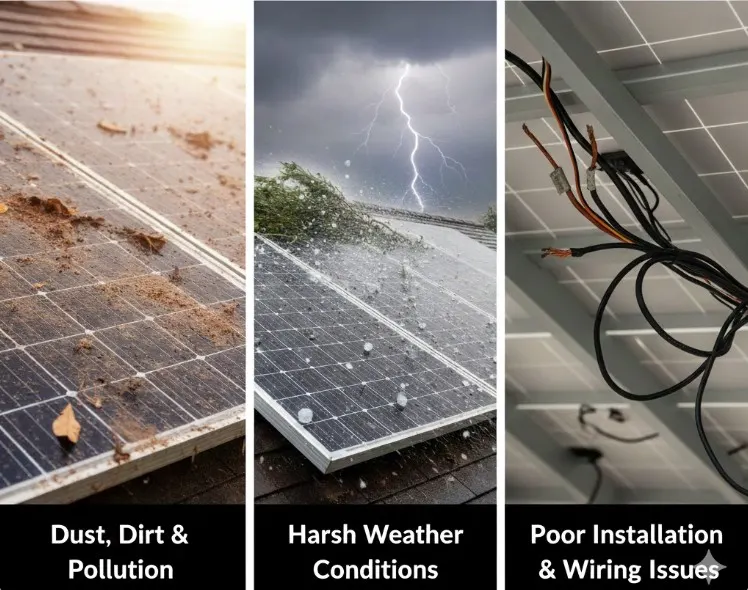
Dust, Dirt & Pollution
Dust accumulation is one of the most common reasons behind reduced solar panel efficiency. In cities, pollution particles mix with moisture and form sticky layers on the panel surface. This blocks sunlight and forces the panels to work harder to produce the same amount of power. Over time, this constant strain lowers overall solar panel performance and shortens solar panel longevity.
Harsh Weather Conditions
Extreme climates significantly affect the lifespan of solar panels. High temperatures can reduce efficiency temporarily, while excessive humidity can cause corrosion in exposed metal parts. Hailstorms and heavy winds may create micro-cracks on panels, which slowly grow and impact energy output. Without protection, repeated weather stress lowers the expected life of solar panels.
Poor Installation & Wiring Issues
Improper installation is a silent culprit behind early system failure. Weak mounting structures, incorrect tilt angles, loose connections, and poor grounding can cause power leakage, overheating, and safety risks. These problems reduce solar panel performance and increase the chances of inverter failures and electrical damage.
Best Tips to Extend the Lifespan of Solar Panels Easily
You don’t need to be an expert. These simple habits make the biggest difference:
-
Clean panels 2–4 times per year (or after heavy pollen/dust seasons)
-
Trim trees and remove new shading sources immediately
-
Keep at least 10–15 cm airflow space under panels
-
Check and tighten loose cables/connectors once a year
-
Install bird-proof mesh or critter guards
-
Book a professional solar panel inspection every 12–24 months
Do these, and your solar panel longevity will far exceed the average.
Importance of Solar Panel Cleaning & Maintenance
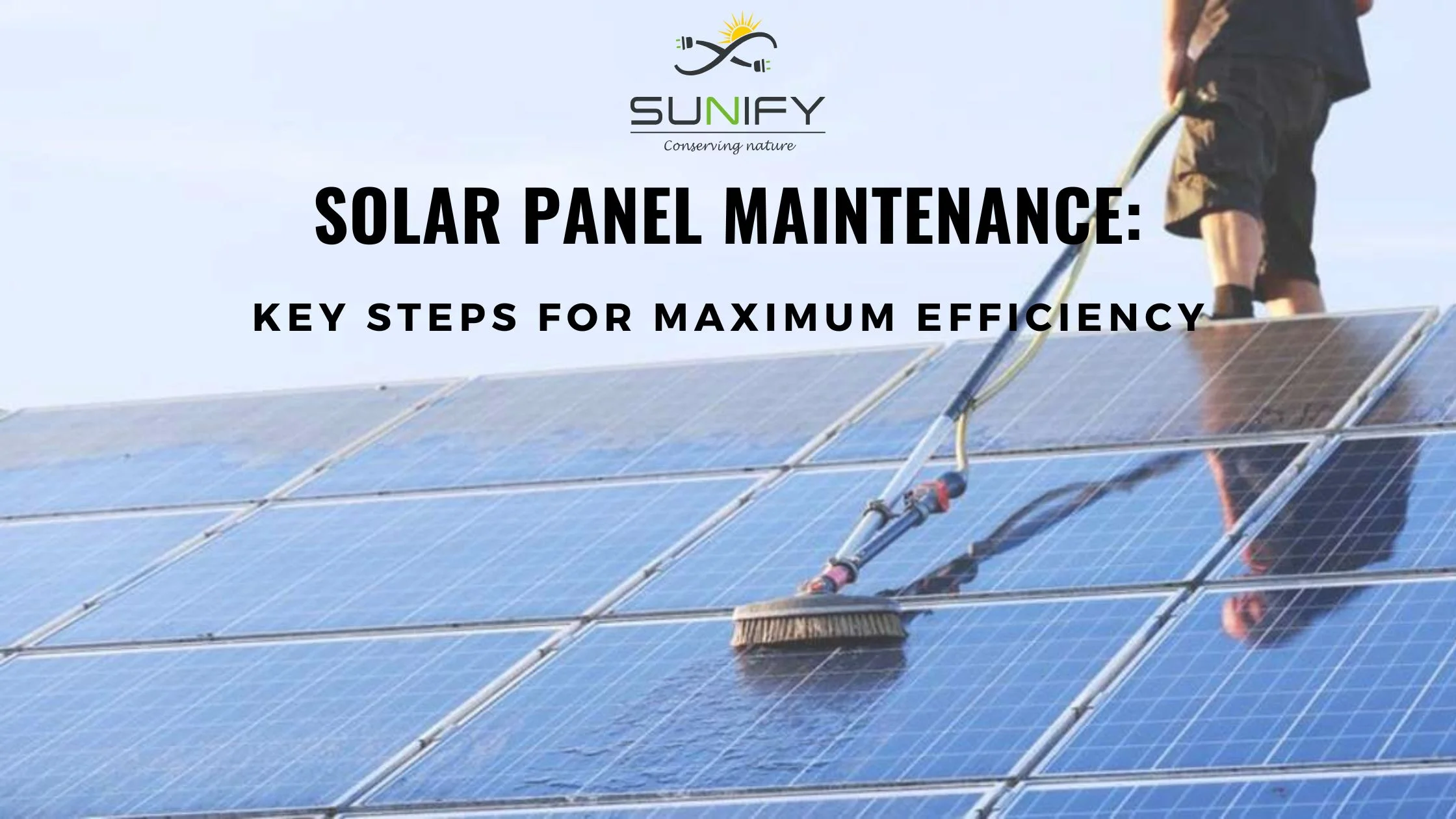
Regular solar panel cleaning is one of the simplest and most powerful ways to protect long-term performance. Dust, bird droppings, leaves, and pollution layers act as barriers that block sunlight from reaching the solar cells. Even a thin dust layer can reduce solar panel efficiency by 15–25%, especially during dry seasons. This leads to lower daily power generation and slower returns on your solar investment.
Along with cleaning, proper solar panel maintenance includes checking wiring, mounting frames, earthing systems, and inverter health. Neglecting these areas can result in unnoticed energy losses, electrical risks, and costly long-term damage. Routine maintenance ensures stable solar panel performance, improves safety, and directly contributes to better solar panel longevity.
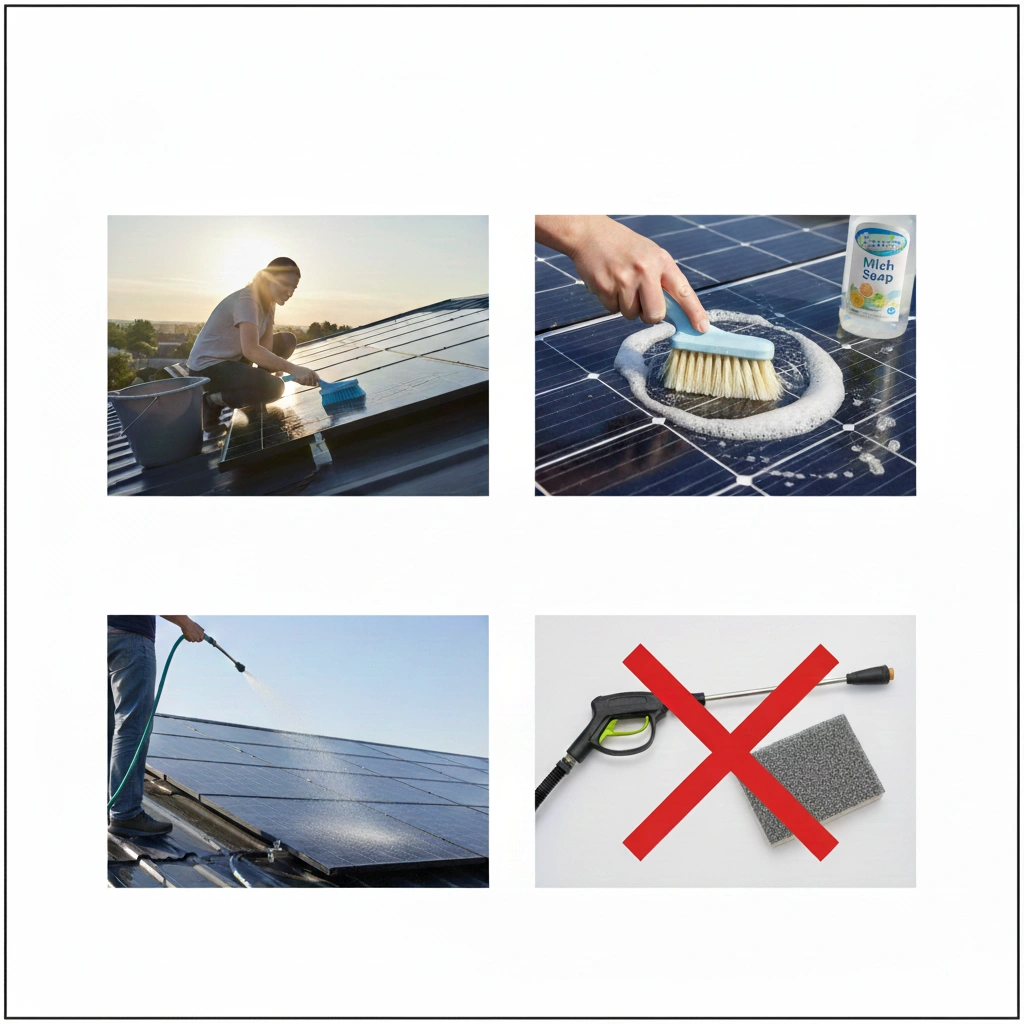
Best way to clean solar panels at home
-
Early morning or evening (cool panels)
-
Soft brush + lukewarm water + mild dish soap
-
Never use abrasive materials or pressure washers
-
Use a hose with a gentle spray nozzle from the ground when possible
How Weather Impacts Solar Panel Durability
Weather plays a continuous role in shaping the lifespan of solar panels. High ambient temperatures increase electrical resistance inside the panel, which reduces output slightly. While solar panels are built to tolerate heat, continuous exposure to extreme temperatures over many years can weaken internal components and connections if the system is not properly ventilated.
Heavy rainfall and high humidity create long-term moisture exposure risks. Although quality panels are waterproof, prolonged humidity can affect junction boxes, wiring insulation, and metal frames. Without proper sealing and corrosion-resistant materials, moisture penetration can reduce solar panel performance and lead to electrical faults.
Hailstorms, storms, and strong winds pose physical risks. Even small surface cracks caused by hail can grow over time and reduce solar panel efficiency gradually. Strong winds can loosen mounting structures, causing vibrations that slowly weaken panel frames. Protective installation and regular inspection help manage these climate-related threats effectively.
Role of Proper Installation in Long-Term Solar Performance
Correct installation directly determines how efficiently your system performs over its lifetime.
Correct Tilt, Angle & Orientation
Panels must be positioned to receive maximum sunlight throughout the year. Incorrect tilt reduces solar exposure and increases dust accumulation, lowering solar panel efficiency.
Structural Strength & Mounting Quality
Strong mounting prevents vibration, sagging, and wind damage. Weak frames increase the risk of cracks and electrical strain.
Proper Earthing & Electrical Safety
Poor grounding can cause electric shocks, inverter damage, and voltage instability. Safe earthing improves both performance and safety.
Importance of Certified Installers
Certified installers follow electrical standards, optimize layout design, and ensure clean cable routing. Their expertise directly improves the expected life of solar panels and ensures stable solar panel performance.
Inverter & Electrical System Maintenance (Expanded with Subpoints)
The inverter is the control center of your solar power system and requires equal attention.
Why Inverter Health Matters
Even when panels are functioning well, a weak inverter can limit total output. Inverters handle constant voltage conversion, and thermal stress can slowly reduce their efficiency.
Wiring & Connection Stability
Loose connections cause overheating and power loss. Aging wires can crack insulation, creating serious safety hazards. Regular electrical checks improve solar panel longevity and prevent failures.
Surge Protection & Voltage Control
Lightning strikes and grid fluctuations can damage sensitive inverter circuits. Installing surge protection devices protects both inverter and panels, preserving solar panel performance.
Monitoring Solar Panel Performance Regularly
Monitoring is essential to maintaining consistent solar power generation. Modern monitoring apps allow users to track daily, monthly, and yearly electricity production in real time. These systems help detect even small drops in output that indicate dust buildup, wiring issues, or inverter inefficiencies. Early detection prevents performance losses from becoming long-term damage.
Sudden decreases in power generation, frequent inverter warnings, or irregular voltage output are early warning signs. These problems should be addressed immediately through solar panel inspection. Ignoring such signals allows internal damage to expand and gradually shortens the solar panel lifespan.
Regular performance monitoring also helps users optimize consumption patterns, identify shading issues, and measure actual return on investment. It plays a crucial role in extending solar panel longevity while maximizing energy savings.
Protection from Birds, Pests & Physical Damage
Bird Droppings & Nesting Problems
Bird droppings reduce solar panel efficiency by blocking sunlight. Nesting under panels restricts airflow, causing overheating and performance loss.
Rodent Damage to Wiring
Rodents chew electrical wires and insulation, leading to short circuits, power losses, and even fire hazards. This damage directly affects solar panel performance and system safety.
Physical Impact & Accidental Damage
Falling objects, rooftop maintenance work, and nearby construction activities can crack panels or loosen mounting structures. Protective boundaries and cautious roof access reduce such risks.
Installing protective mesh around panels is one of the most effective solutions to maintain solar panel longevity while preventing repeated damage.
Cost Benefits of Extending Solar Panel Lifespan
Maintaining your system properly offers powerful financial advantages.
-
Fewer repair and replacement expenses
-
Higher lifetime energy output
-
Faster return on investment
-
Long-term reduction in power bills
-
Better solar panel performance year after year
Extending the lifespan of solar panels means extracting maximum value from your initial installation.
Why Choose Sunify Solar The Brand Behind Your Panels
Sunify Solar is committed to delivering high-quality, durable, and reliable solar energy solutions for residential, commercial, and industrial use. The brand focuses on combining smart technology with long-term performance to ensure customers receive consistent solar power for decades.
Sunify Solar uses advanced manufacturing processes to build best solar panels that offer high efficiency, structural strength, and long operational life. Every system is designed with durability in mind, helping maximize the expected life of solar panels under real-world conditions.
With a strong focus on quality control, solar panel inspection standards, and customer support, Sunify Solar helps users protect their systems while achieving excellent solar panel efficiency and reliability. Their approach ensures that customers don’t just install solar panels they secure long-term energy independence.
Common Myths About Solar Panel Lifespan
-
Many misconceptions stop people from maintaining their systems properly.
-
Myth: “Rain cleans the panels well enough”
-
Truth: Rain rarely removes pollen, bird droppings, or sticky pollution.
-
Myth: Solar panels stop working after 10 years
-
Truth: With proper solar panel maintenance, they perform efficiently for decades.
-
Myth: “Solar panels need no maintenance”
-
Truth: Basic solar panel maintenance can add 10+ extra years.
Improve Solar Panel Efficiency
Conclusion
The lifespan of solar panels is not fixed it depends on how well you care for your system. With proper cleaning, installation checks, electrical safety, and performance monitoring, your solar panels can deliver clean and reliable energy for 30 years or more.
Solar power is a long-term investment, and protecting that investment with smart solar panel maintenance ensures consistent energy savings, better system health, and improved solar panel performance year after year.
Easy Homeowner Maintenance Checklist
-
Clean panels 2–4 times a year
-
Inspect wiring and inverter regularly
-
Remove shading and debris
-
Monitor daily energy output
-
Schedule annual solar panel inspection
FAQs – People Also Ask
1. How many years do solar panels really last?
25–30 years at 80%+ performance guaranteed; 35–40+ years common with good care.
2. Does solar panel cleaning really make a difference?
Yes removes 15–30% losses in most regions.
3. What affects the lifespan of solar panels the most?
Dirt buildup, poor installation, lack of monitoring, and extreme weather.
4. How often should solar panels be professionally inspected?
Once every 1–2 years, plus homeowner checks in between.
5. Do solar panels lose efficiency every year?
Yes, a normal 0.4–0.8% annual degradation extremely slow and manageable.
Share this post :


Whatsapp Chatx
Hi! Click one of our representatives below to chat on WhatsApp or send us email to solar@sunifysolar.in

|
************** +91 81414 55503 |
